Doctoral Letters After a Commercial Career: What UK Headhunters Actually Read

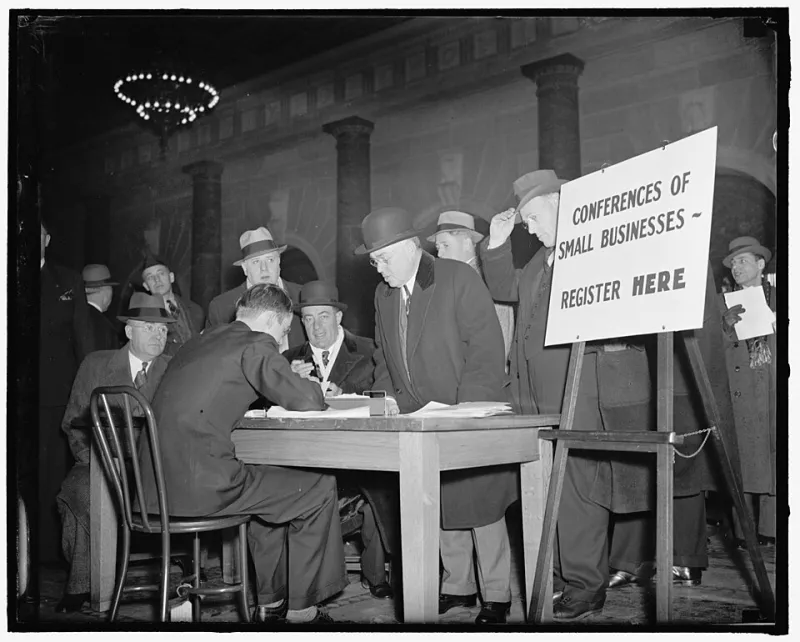
Photo: executive search consultant reviewing CV with board appointment panel, via vault.armsdirectory.com
Executive search works by pattern recognition under time pressure. A consultant scanning a long list spends seconds on each CV, looking for signals that answer a client's brief. A board appointment panel, working through a shortlist, reads with slightly more patience but no more specialist knowledge. Neither group is trained to evaluate a doctoral thesis.
That is the central fact for any UK leader considering how to present a DBA. The qualification will be read — but it will be read as evidence of something, not as a research document. The candidate's task is to control what that something is.
The three reactions a DBA typically provokes
In practice, search consultants and panel members respond in one of three ways.
The first is recognition: the reader knows the difference between a DBA and an MBA, understands that the former involves original research under examination, and treats it as evidence of analytical depth and intellectual persistence. This reaction is more common in sectors with dense academic or clinical populations — health, defence, regulated industries, parts of the public sector — than in general commerce.
The second is conflation: the reader registers 'doctorate' and defaults to an academic career, or assumes the DBA is a taught qualification with a longer project attached. This produces the familiar question about whether the candidate is 'moving into academia'.
The third is suspicion: the reader has encountered a CV that overstated a doctoral title or described a thesis in impenetrable language, and discounts accordingly.
Most senior candidates will meet the second reaction and must be prepared for the third.
What search actually extracts from a CV
Headhunters are looking for scale, scope, trajectory and risk. A DBA contributes to that reading only when it is presented in those terms.
Compare two lines. The first: 'DBA, University of X — thesis on organisational sensemaking in regulatory change.' The second: 'DBA (University of X, 2025) — four-year study of how nine UK financial services firms restructured governance through a regulatory change programme; findings adopted by two participating boards.'
The first describes an academic artefact. The second describes a research programme with a population, a period and an outcome. The second is shorter to absorb and far more useful to a consultant drafting a candidate summary for a client.
Translating thesis evidence into board-readable claims
Three translations do most of the work.
Method becomes capability. Doctoral training in research design, evidence appraisal and structured analysis maps directly onto board work: assessing a business case, interrogating a management dashboard, weighing competing evidence in a remuneration or audit discussion. Say so plainly rather than hoping the reader infers it.
Sample becomes scope. 'Thirty-two interviews with NHS trust directors' is more legible than 'a qualitative study of senior stakeholders'. Numbers, sectors and seniority of participants all signal access and credibility.
Findings become judgement. You do not need to summarise the thesis. You need one sentence that shows what you now understand that you did not before, ideally with a practical consequence. 'The research showed why governance reforms fail at the middle-management layer, which shaped how I sequenced the integration programme I subsequently led.'
The jargon problem
Academic vocabulary is a professional dialect, and it does not travel. Terms such as 'sensemaking', 'institutional isomorphism', 'abductive coding' and 'positionality' are precise and defensible inside a viva. On a CV read by a search consultant, they read as opacity — or worse, as a signal that the candidate enjoys obscurity.
Use the plainest available description of the subject. If the research is about how boards respond to regulation, say that. Precision can be recovered in interview; clarity cannot be recovered from a first impression.
Overstatement, and the particular risk of the title
UK convention permits DBA holders to use the title 'Dr' in many institutions, though practice varies and candidates should confirm the position with their awarding body. Whatever the entitlement, restraint is usually wise in commercial contexts. A CV headed 'Dr' in a sector where the convention is first-name informality can read as status assertion; the same qualification listed under Education reads as substance.
Overstatement is the greater hazard. Avoid 'leading expert', 'pioneered' and 'world-first' unless they are demonstrably true and verifiable. Board panels increasingly conduct light-touch verification, and a doctoral claim that does not survive a reference check is disproportionately damaging because it appears deliberate.
Equally, avoid overclaiming impact. 'Research adopted nationally' invites a question about who adopted it. 'Findings presented to two select committees and used in a sector body's guidance' is specific and checkable.
Positioning alongside, not against, the MBA and the track record
A common error is to present the DBA as a superior substitute for earlier qualifications. Board panels generally want the opposite: a coherent professional formation in which each stage adds something.
A workable narrative is sequential. The MBA or professional qualification built commercial and functional fluency. The operating career built delivery at scale. The DBA built the capacity to generate original evidence about a problem the candidate had encountered repeatedly and could not solve with existing knowledge. Each element answers a different question, and the doctorate answers the question of judgement under uncertainty.
That framing also disarms the 'is he going into academia?' question. The answer is that the research was undertaken from practice, about practice, and has been applied within practice — which is precisely what a board should want from a doctoral holder.
Practical presentation
On a two-page CV, the DBA belongs under Education with the institution, dates, thesis subject expressed plainly and one line of outcome. In a covering statement or search interview, it belongs in a short paragraph that links the research question to a business problem the reader recognises.
Have a sixty-second version ready. Have a two-minute version for the panel. Neither should contain a single term you would not use in a board meeting.
The reading you are trying to earn
The realistic ambition is not that a search consultant will understand your thesis. It is that they will see a leader who has submitted to independent scrutiny, produced evidence rather than opinion, and can explain complex work in plain language.
That is a rare combination in a shortlist. Present it clearly, and the doctorate will do the work you intended it to do.