The Examined Executive: Preparing for a DBA Viva Without Borrowing Boardroom Habits
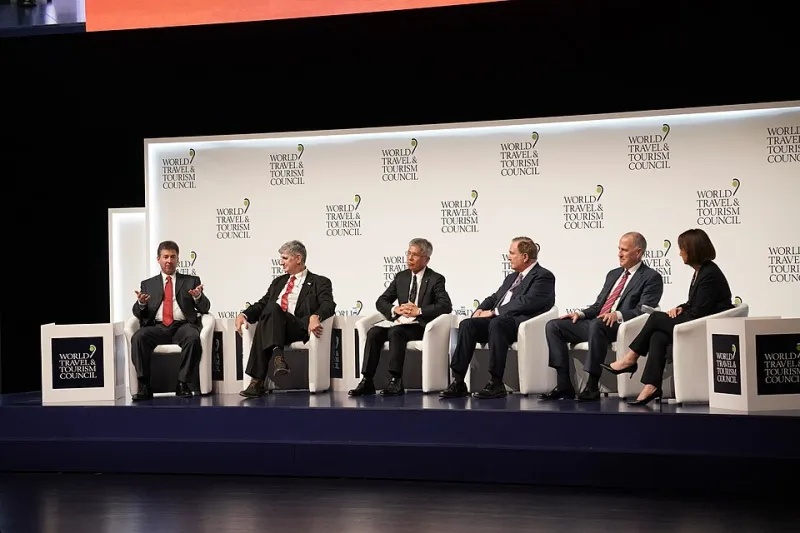
Photo: World Travel & Tourism Council, CC BY 2.0, via Wikimedia Commons
A board meeting rewards command of the room. A viva rewards command of the argument. That distinction is easy to state and surprisingly difficult to enact for a senior executive who has spent years being rewarded for advocacy, brevity and decisive closure. In a UK DBA viva voce, the candidate sits with internal and external examiners, sometimes with an independent chair, to defend a thesis that has already been read closely. The examiners are not there to be persuaded by force of personality. They are there to test whether the research is coherent, original, methodologically sound and appropriately bounded. The candidate's task is not to win agreement but to demonstrate scholarly judgement.
The boardroom reflex and why it misfires
Executives are trained to simplify complexity, project confidence and close down ambiguity in the service of a decision. Those habits are valuable in governance. In a doctoral examination they can be hazardous. A candidate who overstates contribution, glosses over methodological compromises or treats a challenge as an obstacle to be overcome may appear less secure, not more. Examiners are likely to probe the places where the thesis is weakest because that is how they assess whether the candidate understands the limits of the work.
The more useful posture is inquiry. The candidate should be able to say what was done, why it was done that way, what the evidence will bear and what remains uncertain. A viva is not a performance of certainty. It is a demonstration that the candidate can reason under examination, distinguish evidence from interpretation and recognise the boundaries of a claim. In practice, that means preparing to say 'the evidence supports a narrower conclusion than the thesis initially proposed' without treating that admission as a defeat.
The questions that tend to surface
Most DBA vivas cluster around a recognisable set of concerns. The wording varies, but the underlying tests are consistent.
- Contribution and gap: What is the original contribution to knowledge, and how does it differ from existing practice-based accounts? Why does this gap matter, and to whom?
- Methodology and design: Why this approach rather than a survey, ethnography, case study or mixed-methods design? How were participants selected, and what does that mean for the claims made?
- Analysis and evidence: How were data coded and interpreted? What disconfirming evidence was sought? How do you know that your interpretation is not simply the most convenient one?
- Reflexivity and ethics: How did your senior position shape access, disclosure and the way participants responded to you? What safeguards protected participants and your employer?
- Limitations and implications: What can this study not claim? Which findings are transferable, and under what conditions? What should a practitioner or policymaker do differently as a result?
- Doctoral level: What makes this a DBA rather than a PhD, or a substantial consultancy report? How does the thesis connect theoretical framing to applied practice?
These questions are not traps. They are invitations to show that the candidate can hold the whole project in view. The strongest answers are usually short, evidence-referenced and candid about limits. A one-page summary of each chapter, with page references for key decisions, is often more useful in the final weeks than another broad rereading of the literature.
When practitioner bias is raised
A challenge about practitioner bias should not be treated as an insult. It is an invitation to demonstrate reflexivity. Senior executives bring real advantages to doctoral research: access, contextual knowledge and the ability to recognise practice problems that outsiders might miss. They also bring risks: over-identification with the organisation, selective attention to favoured explanations and power differentials in interviews.
The candidate should be able to explain the mechanisms used to manage those risks. A positionality statement is a start, but examiners will want to know how it affected the design. Did the candidate interview people who might disagree? Was the audit trail sufficiently detailed for a supervisor or examiner to follow the analytical decisions? Were interpretations tested with peers, supervisors or participants? Were alternative explanations deliberately pursued? A useful formulation is: 'My seniority helped me gain access, but it may have encouraged participants to tell me what they thought I wanted to hear. I sought to counter that through anonymous follow-up, triangulation with documents and a supervisory review of coding decisions.'
The candidate should also avoid defending a preferred conclusion as if it were a personal achievement. If an examiner says the evidence does not support a causal claim, the appropriate response is to acknowledge the point, explain what claim the evidence does support and show how the thesis has been revised or bounded. That is not weakness. It is the behaviour of a researcher.
A twelve-week preparation architecture
For busy UK executives, preparation should be scheduled rather than left to goodwill. A twelve-week plan is realistic for most candidates in the final months.
Weeks twelve to nine: reacquaint and map. Reread the thesis with a pen, not a highlighter. Produce a one-page summary of each chapter: question, method, key finding, limitation and contribution. Read the examiners' recent publications where available and note the traditions from which they are likely to question you. Confirm the institution's viva format, including whether a presentation or practice portfolio is required.
Weeks eight to six: build a question bank. Draft around twenty likely questions and write concise answers with page references. Include questions you fear. Identify the three weakest points in the thesis and prepare honest responses. Discuss these with your supervisory team and agree where corrections or clarifications may be needed.
Weeks five to three: rehearse under pressure. Arrange at least one mock viva with a supervisor and, ideally, a colleague outside the project. Record it. The purpose is not to memorise answers but to practise listening, clarifying and responding without defensiveness. Reduce reliance on slides or notes.
Weeks two to one: consolidate. Prepare a short opening statement if required. Assemble errata and a list of likely corrections. Check travel, remote arrangements and timing. Protect sleep. Do not attempt to read a new field in the final fortnight.
On the day
Listen to the whole question before answering. Ask for clarification if the question is ambiguous. A useful structure is: direct answer, evidence, limitation, implication. If you do not know, say so and explain how you would reason towards an answer. Take brief notes. Examiners are usually testing the thesis and the candidate's understanding, not looking for rhetorical victory. Corrections are a normal outcome of a UK doctoral examination, not a sign that the project has failed.
The examined executive is not a diminished executive. The viva asks for a different discipline: the discipline of explaining, qualifying and defending a piece of research without overstating it. That is a professional capability in its own right, and one that many senior leaders find more demanding, and more useful, than another board presentation.